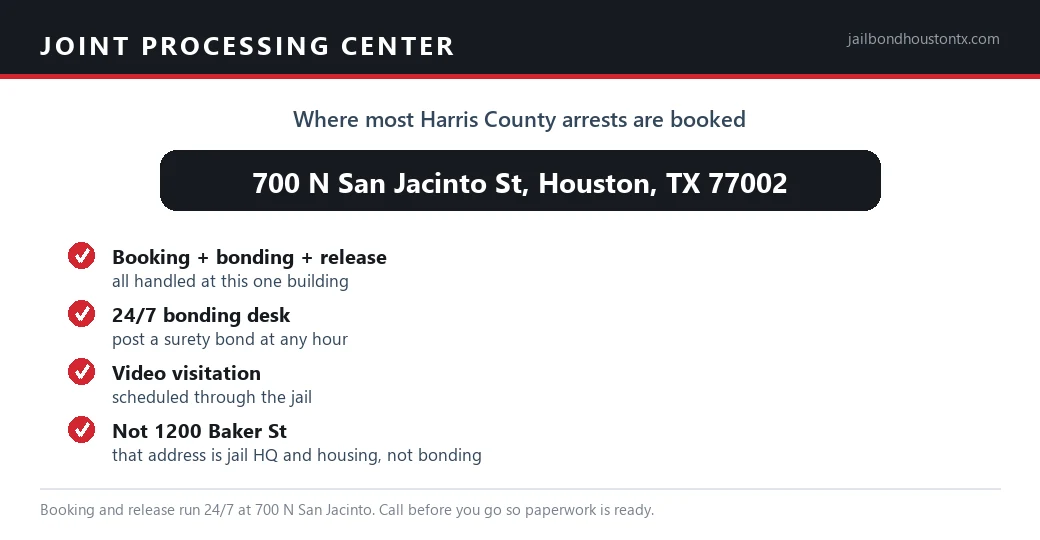
To bail someone out at the Joint Processing Center, 700 N San Jacinto Street, first confirm the person and their bond amount on the Harris County inmate search. Then post a cash or surety bond at the 24/7 bonding desk, where the person is processed and released. Almost every arrest in Harris County runs through this one building, so your loved one is very likely right there, even if the arresting deputy named a different address.
Confirm the Person and the Bond First
Before anyone gets in a car, look the person up. The Harris County inmate search confirms three things you need: that the person is actually in custody, the exact spelling of their name and their SPN number, and the bond amount a magistrate has set. Arriving without that information usually means standing in line only to be turned away, because the booking is not finished or the bond has not been set yet. Whoever plans to post the bond should also bring a valid photo ID, since the desk records who is taking responsibility for it.
Bail is not automatic the moment someone is arrested. Under Texas Code of Criminal Procedure article 15.17, an arrested person must be brought before a magistrate without unnecessary delay and no later than 48 hours, and it is the magistrate who reads the charges and sets the bond amount. Most misdemeanors clear that step within a few hours, while more serious cases can take longer. When the inmate search shows “no bond” or a blank amount, the magistrate has not ruled yet, and there is nothing to post until they do.
What Happens Inside 700 N San Jacinto
The Joint Processing Center handles the whole intake sequence under one roof. After an arrest, the person is fingerprinted, photographed, screened, and taken before the magistrate for the bail hearing. Once a bond amount exists, you post it at the bonding desk inside that same building, and release happens from there too. That desk runs 24 hours a day, seven days a week, so an arrest in the middle of the night can still be bonded out the same night.
People often get tripped up by the jail a few blocks away at 1200 Baker Street. That facility is longer-term housing for people already in the system, not the intake and release point. You post the bond and pick your person up at the Joint Processing Center, not at Baker Street. When the online search lists a different building, it is usually showing where the person is held between steps, not where you handle the bond. For a fuller walkthrough of the building and its bonding desk, see our page on Joint Processing Center jail bonds.
Cash Bond or Surety Bond: What to Bring
The bonding desk takes two main ways to get someone out. A cash bond means you pay the full bail amount yourself, and the county holds it until the case ends; if every court date is met, that money comes back at the close of the case. A surety bond means a licensed bondsman posts the bond for you and charges a fee, commonly around ten percent of the bail, that you do not get back because it is the cost of the service. Bail bond companies in the county are licensed and regulated under the Harris County Bail Bond Board and Texas Occupations Code Chapter 1704, so you are dealing with a vetted surety rather than a stranger.
Which route makes sense depends on the numbers. A small misdemeanor bond is often easier to pay in cash and recover later, while a five-figure felony bond is where most families use a surety instead of tying up their savings. Run the math on our bail bond cost page with a live calculator before you decide. Sometimes a magistrate grants a personal bond under Texas Code of Criminal Procedure article 17.42, which lets the person out on a written promise and a small fee instead of the full amount; our page on personal bonds in Harris County explains who qualifies and how they compare to cash and surety.
After the Bond Is Posted
Once the paperwork clears the bonding desk, the release process begins, though it is rarely instant. Processing a posted bond and walking someone out often takes several hours even when everything is in order, because the jail still has to verify there are no other holds and finish the release on its end. Our timeline page on how long release takes after a bond is posted gives realistic ranges so you are not waiting in the lobby wondering if something went wrong. Have a phone number ready and stay reachable, since the bonding desk may need a signature or a document before the release can move forward.
Getting out is a promise, not the end of the case. Every bond carries conditions, and the most important one is showing up to every court setting. Missing a court date can trigger a separate charge for bail jumping and failure to appear under Texas Penal Code section 38.10, forfeit the bond, and land the person back in custody. Keep the court paperwork, write down every date, and call your bondsman if anything changes. When the arrest grew out of an open warrant, it is often possible to arrange release ahead of time through a walk-through bond; our page on warrant and walk-through bonds covers how that works so no one has to sit in intake at all.